Let’s face it: navigating the labyrinthine rules of APA style can feel like deciphering an ancient scroll. From ensuring every comma is in its rightful place to remembering the precise formatting for a journal article versus a website, the sheer mental bandwidth required for referencing can be overwhelming. This is where understanding APA citation generators becomes not just helpful, but truly transformative. Imagine cutting down hours of tedious formatting, reducing stress, and virtually eliminating those pesky citation errors that chip away at your grade. That's the promise these smart tools offer, and with the right approach, they deliver.
At a Glance: What You’ll Learn
- What They Are: Software tools that automate APA citation formatting.
- Why They Matter: Save significant time, boost accuracy, and improve grades.
- How They Work: Input source details (URL, DOI, ISBN), and the generator retrieves and formats.
- Behind the Accuracy: Trustworthy generators integrate with academic databases to prevent errors.
- APA 7th Edition Mastery: Tools help you apply the latest rules effortlessly.
- Common Mistakes Vanish: Say goodbye to capitalization errors, incorrect DOIs, and formatting woes.
- Smart Usage: How to leverage features and when to double-check for tricky cases.
The Manual Citation Trap: Why We Need a Better Way
For students, researchers, and academics alike, the bibliography or reference list often represents the final hurdle in any significant paper. You’ve poured countless hours into research, drafted compelling arguments, and meticulously edited your prose. Then comes the citation grind: hunting for author names, publication years, journal volumes, page numbers, and that elusive DOI. One misplaced comma, an incorrect italicization, or a forgotten period can turn an otherwise stellar paper into an unnecessarily penalized one.
Historically, this has been a necessary evil. Learning APA style (developed by the American Psychological Association and widely adopted in social sciences, psychology, and education) is an essential academic skill, emphasizing the timeliness of research through its clear author-date format (e.g., Smith, 2023). However, the manual application of its myriad rules is incredibly time-consuming and prone to human error, especially for those juggling multiple sources and tight deadlines. This is precisely the problem APA citation generators were designed to solve.
What Exactly Is an APA Citation Generator?
At its core, an APA citation generator is a sophisticated software tool engineered to automatically format academic citations according to the American Psychological Association (APA) style guide, most commonly the 7th edition. Think of it as your personal, endlessly patient citation assistant.
You provide the vital source details – perhaps a URL for an online article, a DOI for a journal, or an ISBN for a book – and the generator springs into action. It retrieves the necessary publication information, applies the precise punctuation and layout rules prescribed by the official APA style guide, and then outputs a perfectly formatted in-text citation and/or a reference list entry. You can then simply copy and paste these formatted citations directly into your academic paper's bibliography, confident that they adhere to the required standards.
The Undeniable Benefits: Why Smart Students & Researchers Swear By Them
While some might argue that relying on tools diminishes the "skill" of manual citation, the reality is that the benefits of using a robust APA citation generator far outweigh any perceived drawbacks. Primarily, college-level and post-graduate students are the biggest beneficiaries, as APA style remains the most favored style in higher education.
Here's why they’ve become indispensable:
- Massive Time Savings: This is perhaps the most significant advantage. Instead of spending hours meticulously typing out references and cross-referencing against the style guide, a generator can produce accurate citations in seconds. This frees up invaluable time you can dedicate to research, writing, and refining your actual content.
- Unmatched Accuracy: Human error is inevitable. A generator, especially one built on validated rules and verified data, drastically reduces the likelihood of mistakes like incorrect capitalization, missing DOIs, or improper author formatting. This consistency and precision are difficult to achieve manually, especially under pressure.
- Higher Grades: Bibliographies and reference lists are often graded on accuracy against the official APA rulebook. Correctly formatted citations demonstrate attention to detail and academic rigor, which can directly translate into better marks.
- Consistency Across Sources: Manual citation often leads to subtle inconsistencies in formatting across different sources. A generator applies the same rules every time, ensuring a uniformly professional appearance for your entire reference list.
- Reduced Stress & Cognitive Load: The mental burden of worrying about formatting can distract from the intellectual work of your paper. Offloading this task to a reliable tool allows you to focus on what truly matters: your arguments and analysis.
How APA Citation Generators Work: A Seamless Process
While each generator might have a slightly different interface, the core process remains remarkably consistent and user-friendly. Let's walk through the typical steps:
- Input Your Source: You begin by telling the generator what kind of source you're citing (e.g., website, book, journal article). Then, you input key identifying information. This is often the source's URL, DOI (Digital Object Identifier), or ISBN (International Standard Book Number).
- Automatic Information Retrieval: This is where the magic happens. Tools like the Wordvice AI APA Citation Generator automatically create formatted citations by retrieving publication information from the URLs, DOIs, or ISBNs you provide. They query vast databases to pull author names, publication years, titles, journal names, page numbers, and more.
- Manual Input (When Needed): Occasionally, a generator might not find all the necessary information, or perhaps your source is obscure. In such cases, the generator will prompt you to manually add any missing details, ensuring no crucial piece of data is left out.
- Instant Citation Generation: Once all information is gathered, the generator applies the relevant APA 7th edition rules and instantly produces your perfectly formatted citation. You'll see both the in-text citation (e.g., (Smith, 2023)) and the full reference list entry.
- Build Your Bibliography: For longer papers, you'll repeat this process for all your sources. Most generators allow you to accumulate these citations into a running bibliography, which you can then download in a formatted list, often compatible with Microsoft Word and Google Docs.
Behind the Scenes: Ensuring Accuracy with Data & Rules
The reliability of an APA citation generator hinges on its underlying technology and data sources. Not all tools are created equal, and some generic AI tools might be prone to "hallucination" – generating plausible but incorrect information. However, top-tier generators employ rigorous processes to ensure accuracy:
- Database Integration: The most accurate generators, like Wordvice AI, ensure accuracy through robust database integration. They retrieve data from trusted academic databases linked to DOIs, ISBNs, and reputable URLs. This direct link to verified publication data is crucial for preventing inaccuracies.
- Real-Time Validation: Beyond simply pulling data, these tools often perform real-time validation. This means cross-referencing information from multiple databases to confirm publication details, ensuring consistency and correctness.
- Official Style Guide Application: A core function is the precise application of official 7th edition APA formatting rules. This includes every detail from author name inversion (Last name, Initials) to sentence case for titles, and the correct placement of DOIs.
- Detection of Missing Elements: Before exporting your bibliography, advanced generators can detect missing but required elements, such as a DOI for a journal article, prompting you to review and add them.
This meticulous approach means you're not just getting a random guess; you're getting a citation built on validated ground truth.
Mastering APA 7th Edition with Your Generator
The APA 7th Edition brought several key updates and simplifications, and a good generator is invaluable for keeping up. Here are some critical rules generators help you apply seamlessly:
In-Text Citations
- One Author: Parenthetical (Smith, 2020); Narrative Smith (2020).
- Two Authors: Parenthetical (Johnson & Lee, 2021); Narrative Johnson and Lee (2021).
- Three or More Authors: A significant update! Now, use "et al." after the first author in all in-text citations. Parenthetical (Martinez et al., 2022); Narrative Martinez et al. (2022).
- Direct Quotes: Always include the page number. Example: (Brown, 2023, p. 45).
Reference List Formatting
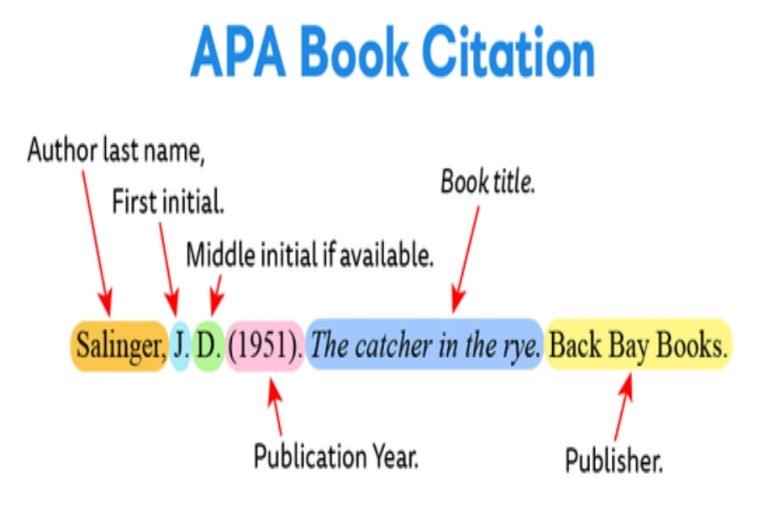
- Author Names: Inverted format (Last name, Initials). Example: Author, A. A.
- Titles: Crucially, titles of articles and chapters are in sentence case (only the first word of the title and subtitle, and proper nouns, are capitalized). Book and journal titles are italicized and in title case.
- DOI/URL: Include DOI or URL when available. DOIs should be formatted as a URL (e.g., https://doi.org/10.xxxx).
- Multiple Authors (Reference List): Reference lists should include up to 20 authors. For 21 or more authors, list the first 19, insert an ellipsis (...), then add the final author.
- "Retrieved from" No More: For most online sources, "Retrieved from" is no longer required before URLs.
- Single Space After Periods: A small but important detail – a single space is now inserted after periods at the end of sentences.
Your generator will handle these nuances, ensuring your bibliography adheres to the latest standards. For example, if you're frequently citing online sources, leveraging an APA website citation generator can prevent common errors with dates and URLs.
Common APA Formatting Mistakes Generators Help You Avoid
Many of the typical errors students make are precisely what these tools are designed to catch and prevent:
- Incorrect Capitalization: Titles of articles and chapters should be in sentence case, not title case. Book and journal titles are in title case and italicized. Generators apply this rule automatically.
- Missing or Improperly Formatted DOIs: DOIs should now be presented as a URL (e.g., https://doi.org/10.xxxx). A generator will retrieve and format this correctly.
- Incorrect Author Formatting: Manually remembering to invert author names (Surname, Initials) can lead to errors. Generators do this consistently.
- Italicization Errors: Knowing when to italicize (book and journal titles) and when not to (article titles) is tricky. The generator takes care of it.
- Date Format Issues: Online sources often require a specific date format (Year, Month Day). The generator pulls this data and formats it correctly.
By using verified publication data and applying official rules, generators significantly reduce these common pitfalls.
Handling Tricky Cases: When Human Oversight is Still Key
While generators are incredibly powerful, there are a few special cases where your understanding and manual intervention might still be necessary to ensure absolute perfection:
- No Author: If a source has no identifiable author, use the source's title in place of the author. In-text, use quotation marks for article or web page titles and italics for book or report titles, shortening long titles. Example: ("Understanding Citation Practices," 2024).
- No Date: For sources without a publication date, use "n.d." (no date) in place of the year. Example: (Smith, n.d.).
- Organizations as Authors: In the first instance, write out the full name of the organization with its abbreviation (e.g., National Institute of Mental Health [NIMH], 2024). Thereafter, use only the abbreviation (NIMH, 2024). The reference list entry will use the full organizational name.
- Multiple Authors (Reference List, 21+): As mentioned, the rule for 21 or more authors requires listing the first 19, an ellipsis (...), then the final author. While many generators handle this, it’s a good detail to be aware of.
In these less common scenarios, double-checking the generator's output against the official APA style guide or your instructor's specific guidelines is always a smart move.
Choosing the Right APA Citation Generator for You
With several options available, how do you pick the best tool for your needs? Consider these factors:
- Accuracy & Reliability: This is paramount. Look for generators that explicitly mention database integration, real-time validation, and adherence to the official APA 7th edition rules. Tools that can retrieve data from URLs, DOIs, and ISBNs are often more reliable.
- Supported Source Types: Ensure the generator can handle the variety of sources you typically use (websites, books, journals, newspapers, reports, videos, etc.).
- APA 6th & 7th Edition Support: If you're working on older projects or for instructors who still prefer APA 6th, look for a generator that supports both versions.
- Ease of Use: An intuitive interface that makes it easy to input information and manage your bibliography is crucial.
- Export Options: Can you download your formatted bibliography to common word processors like Microsoft Word or Google Docs?
- Additional Features: Some generators offer auto-cite functionality, plagiarism checkers, or reference management capabilities.
Beyond the Basics: Making the Most of Your Generator
To truly unlock the power of these tools, consider integrating them into your workflow proactively:
- Cite As You Go: Instead of waiting until the end, cite each source as you use it. This prevents forgetting sources and makes the final bibliography much less daunting.
- Organize Your Bibliography: Most generators allow you to save and manage multiple bibliographies for different projects. Keep them organized!
- Proofread (Always!): Even the best generators are tools. A quick proofread of your generated bibliography is always recommended, especially to catch any nuances related to your specific sources or institution's requirements.
- Understand the "Why": While generators handle the "how," continuing to understand the "why" behind APA rules helps you contextualize your citations and troubleshoot any unique issues.
The Human Element: Tools Enhance, Not Replace, Understanding
Ultimately, an APA citation generator is a powerful assistant, not a replacement for your critical thinking or academic understanding. It's a tool that takes the tedious, mechanical work off your plate, allowing you to focus on the intellectual heavy lifting of your research and writing. By understanding how these generators work, their strengths, and their minor limitations, you can leverage them to achieve unparalleled efficiency and accuracy in your academic work. Embrace them, and transform your referencing process from a chore into a seamless, confident step towards academic excellence.