Navigating the complexities of academic citation can feel like a daunting task, especially when dealing with the vast and ever-evolving landscape of online sources. From blog posts to digital journals, podcasts, and videos, the internet is a treasure trove of information, yet knowing how to properly credit it in APA style can be a major hurdle for students and researchers alike. Fortunately, an APA citation generator for websites is your essential academic ally, transforming a time-consuming chore into an efficient, accurate process.
These powerful online tools are designed to streamline the creation of precise APA 7th edition citations, ensuring your academic papers maintain integrity, avoid plagiarism, and earn you every point you deserve for proper formatting. They act as a digital librarian, quickly retrieving and formatting citation data, allowing you to focus more on your research and writing. If you're new to these invaluable tools or want a deeper dive, you'll want to Learn APA citation generators and see how they can revolutionize your workflow.
The Power Behind APA Citation Generators
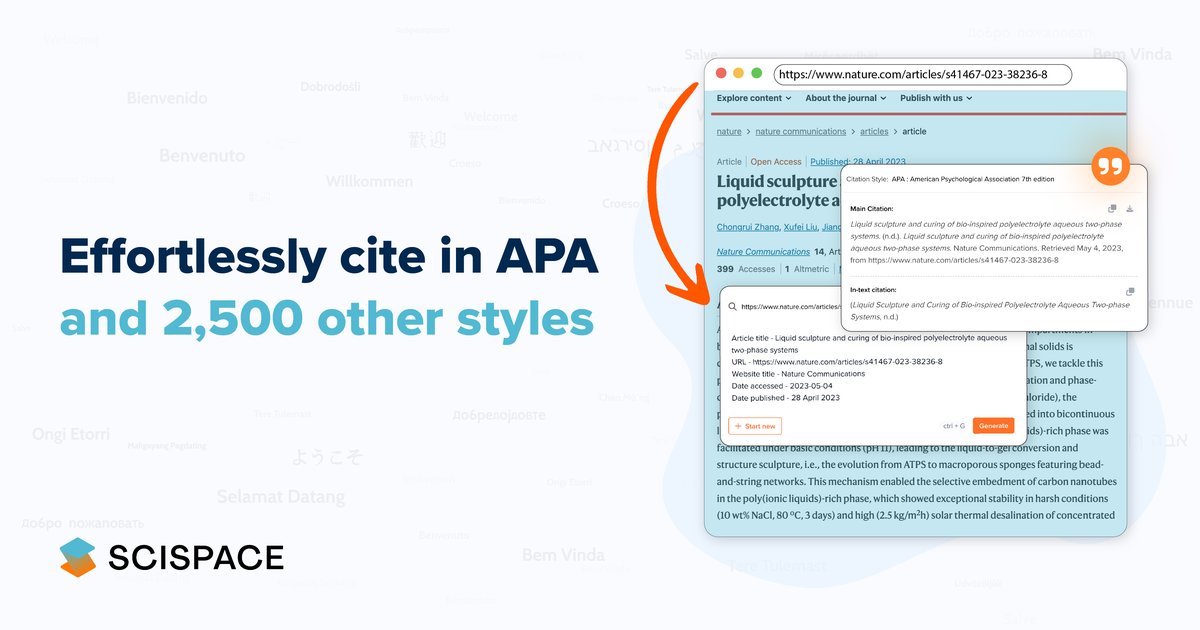
At their core, APA citation generators for websites simplify the citation process dramatically. Instead of manually sifting through style guides, you can simply input a URL, DOI, or even a keyword. The generator then pulls relevant information from authoritative databases like Google Books or CrossRef, crafting perfectly formatted in-text citations and comprehensive reference list entries. This not only saves you precious time but also minimizes the risk of human error, a common cause of lost marks.
These tools handle a wide array of source types beyond just websites, including books, journal articles, videos, PDF reports, podcasts, and more. Once generated, the output is ready for direct copying into your paper or even batch downloading, ensuring consistency across your entire document. Many platforms also offer support for various other citation styles, such as MLA, Chicago, ASA, and IEEE, making them versatile companions for any academic discipline.
Understanding the Core Principles of APA Style
Before diving headfirst into automated tools, it's crucial to grasp the foundational principles of APA style itself. APA, developed by the American Psychological Association, is an editorial style predominantly used in the social and behavioral sciences—think psychology, education, and economics. Its primary purpose isn't just about pretty formatting; it's about maintaining academic integrity, ensuring transparency, and validating your statements with proper, consistent attribution.
The most current standard is set by the Publication Manual of the American Psychological Association, 7th edition, released in Fall 2019. Adhering to these guidelines demonstrates your professionalism and respect for intellectual property. To truly solidify your understanding and ensure your work meets the highest standards, it’s worth taking the time to Master APA Style Fundamentals Learn APA.
Key Elements of APA 7th Edition
Mastering APA 7th edition involves understanding its specific requirements for citing sources and formatting your paper.
- In-text Citations: These brief notations within your text tell readers exactly where your information comes from.
- For direct quotes or paraphrased ideas, typically include
(Author, Date)after the information. - If the author is mentioned in your sentence, simply add
(Date)after their surname. - For specific pages in a source, use
(Date, p. #). - Multiple authors have specific rules: for 3-5 authors, list all in the first citation, then use
(FirstAuthor et al., Date). For 6 or more, use(FirstAuthor et al., Date)from the start. Remember to use&instead ofandfor multiple authors within parentheses. - Reference List & Bibliography: This comprehensive list provides full details for every source cited in your paper.
- It should be titled 'References,' placed on a separate page at the end of your narrative, and organized alphabetically by the author's last name.
- Each entry must feature a hanging indentation, meaning the second and subsequent lines are indented ½ inch from the margin.
- A bibliography, by contrast, includes all consulted sources, even those not directly cited.
- Paper Formatting: Beyond citations, APA style dictates the overall layout of your document (Chapter 2 of the APA 7 Manual).
- Maintain 1-inch margins on all sides.
- Use an easily readable font, such as Times New Roman 12pt.
- Double-space the entire paper, including headings and the reference list.
- Page numbers should appear in the header, right-aligned.
- For professional papers, include a running head: a shortened version of your paper's title (all caps, 50 characters or less) in the header, left-aligned.
- Title Page: If required, this page introduces your work.
- It includes the Paper Title (centered, title case, max 2 lines/12 words, 12pt, not italicized/bolded/underlined), Running Head (page number and shortened title), your Name, and Institutional Affiliation. Everything on the title page is double-spaced.
- Writing Guidelines: APA style also extends to writing best practices.
- Always strive to avoid bias by being specific and avoiding generalizations.
- Use terms like "participants" instead of "subjects."
- Favor active voice, be cautious with sensitive topics, and never alter quotations.
Navigating the Latest: APA 7th Edition Updates, Especially for Digital Sources
Staying current with citation style updates is crucial, and the 7th edition brought several significant changes that particularly impact how we cite online content. These updates simplify many aspects, making the process even more intuitive. For instance, publisher location is generally no longer required, and DOIs are now formatted as direct URLs (e.g., https://doi.org/xxx), removing the redundant "DOI" label.
Furthermore, URLs no longer demand the "Retrieved from" phrase unless a specific retrieval date is necessary. When citing ebooks, you no longer need to include device or platform information like "Kindle." The 7th edition also offers increased flexibility with font choices and simplifies the running head on the title page. Understanding these nuances, especially for the myriad of digital sources available today, is key. To ensure you're citing every online resource perfectly, consider exploring Advanced Digital APA Citation for comprehensive guidance.
Choosing the Right APA Citation Tool for Your Needs
With numerous APA citation generators available, selecting the one that best fits your workflow is important. Look for tools that offer robust database integration, support for various source types, and the flexibility to export in different formats. Some generators provide additional features like plagiarism checks or grammar suggestions, adding even more value to your writing process.
The best tools are user-friendly, accurate, and continually updated to reflect the latest APA guidelines. They should provide clear, actionable output that you can easily integrate into your academic papers. To help you navigate the options and make an informed decision, our guide on Choosing APA citation tools offers a comparative look at popular generators and what makes each stand out.
Troubleshooting Common APA Citation Errors
While citation generators are incredibly helpful, they aren't foolproof. It’s always good practice to review the generated citations, especially for unique or complex online sources. Common errors can arise from incomplete source data, variations in website structures, or simply misinterpreting a specific APA rule. For instance, ensuring all authors are listed correctly or that a retrieval date is only included when necessary are subtle but important details.
Double-checking against the official APA manual or a reliable style guide remains a crucial step in ensuring flawless citations. Being aware of common pitfalls can save you from potential point deductions. If you find yourself frequently encountering similar issues or just want to bolster your understanding of common mistakes, our dedicated resource on Fix common APA citation errors. Troubleshoot provides practical advice and solutions.
Empower Your Academic Journey
The APA citation generator for websites stands as a testament to how technology can simplify academic tasks, making research and writing more accessible and less stressful. By leveraging these tools and understanding the fundamental principles of APA 7th edition, you empower yourself to produce high-quality, credible academic work.
Remember, the goal of citation isn't just about following rules; it's about giving credit where credit is due, strengthening your arguments, and contributing responsibly to the scholarly conversation. Always confirm with your instructor or publisher which version of APA style they prefer before finalizing your work to ensure complete compliance. Embrace these tools, master the style, and elevate the authority of your academic voice.